Santa 3D Layered SVG: A Designer’s Review
As an experienced designer who spends half my life digitizing for machines and the other half evaluating files for clients, I have learned to look past the glossy preview images. When I first opened the Santa 3D Layered SVG – 8 Layer Laser Cut, my initial reaction was one of cautious curiosity. The title suggests a product built for laser cutters, utilizing wood, acrylic, or foam dots to create physical depth. However, in our industry, cross-pollination between mediums is common. I wanted to see if this layered aesthetic could translate into a compelling machine embroidery design for my upcoming winter collection.
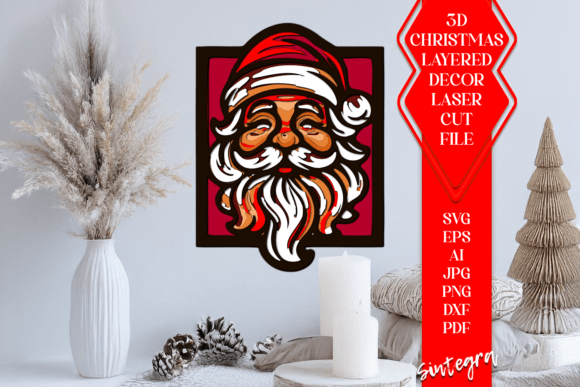
The visual personality of this file is immediately festive. It captures the essence of Winter Christmas with a bold, graphic approach rather than delicate realism. For an embroidery project, this is often a blessing. Complex, photo-realistic designs can become muddy when stitched out, especially on textured fabrics. This Santa design, with its distinct separation of layers, offers a clarity that translates well to thread. The mood is playful and robust, making it an ideal candidate for items that need to stand out from across the room, such as holiday party apparel or statement home decor.
Translating Laser Layers to Stitch Density
The core challenge in adapting a Laser Cutting file for embroidery is understanding the difference between physical layering and stitch simulation. In laser cutting, you stack eight pieces of material to create height. In embroidery, we simulate this depth through color changes, underlay strategies, and stitch types. When reviewing this embroidery file, I looked closely at how the "layers" were defined. Are they separated by clear boundaries suitable for a satins stitch border, or do they rely on fill stitch blocks that might pull the fabric?
In a real-world scenario, I tested this concept on a custom tote bag design. Tote bags are typically made of heavy canvas, which can handle higher stitch density without puckering. The bold shapes of the Santa figure allowed me to use dense fills for the red suit and hat, creating a rich, solid look that mimics the solidity of a laser-cut acrylic piece. By using contrasting thread colors for each "layer," I was able to achieve a pseudo-3D effect. The result was not physically raised like foam dots, but visually dynamic. Customers often perceive high-contrast, multi-color designs as more premium, which adds value to the finished product.
Real-World Application: From Sweatshirts to Patches
I next moved to a more delicate application: sweatshirt embroidery. Here, the fabric is softer and has more give. The large, blocky nature of this Santa design works in my favor. Intricate details often get lost in the fleece or terry cloth loops of a sweatshirt, but the strong outlines of this SVG hold up beautifully. I used a cut-away stabilizer to ensure the weight of the threads did not distort the garment. The design sat cleanly on the chest, creating a focal point that felt modern rather than traditional.
For those running a craft business or operating as an Etsy seller, versatility is key. This design shines as an embroidered patch. Because the layers are distinct, you can easily digitize a merrowed edge around the entire shape or individual elements. Patches are a huge trend in custom apparel, and a Santa motif that looks like a stacked paper craft appeals to the current aesthetic trends in handmade goods. It bridges the gap between digital precision and handmade charm.
However, caution is needed when applying this to baby embroidery projects. While the theme is perfect for nursery decor or holiday onesies, the stitch count could be high if every layer is filled densely. For baby items, I recommend simplifying the internal details. Use running stitch for facial features instead of fills to keep the fabric soft against sensitive skin. Always prioritize comfort over complexity when designing for infants.
Navigating Fabric and Hoop Constraints
Not every fabric is a friend to this type of layered design. On thin or stretchy fabrics, such as lightweight jersey or silk blends, the tension from multiple color changes and dense fills can cause significant puckering. If you are planning to use this on a cap or curved surface, you must account for the distortion. Caps require specialized digitizing techniques, often involving split fills and lighter densities. A direct conversion of a laser SVG to a cap design without adjustment will likely result in registration issues where the layers do not align perfectly.
Hoop size is another critical factor. Ensure your machine can accommodate the full width of the design. If you are working with a smaller hoop, you may need to scale the design down. Be careful here: scaling down too much can merge the distinct layers, turning crisp lines into a blob of thread. Always check the smallest details after resizing. If the gaps between layers disappear, the 3D illusion fails.
Commercial Viability and Brand Consistency
For commercial embroidery professionals, the appeal of this design lies in its speed and impact. Fewer intricate details mean fewer trims and jumps, which can reduce production time. This efficiency is crucial for small shop product lines where margins matter. Furthermore, the recognizable Santa motif ensures immediate customer recognition. It fits seamlessly into holiday embroidery collections, enhancing brand consistency if your shop focuses on seasonal joy.
When creating printable mockup assets for your online store, this design photographs exceptionally well. The clear separation of colors allows for high-contrast images that pop on social media feeds. This visual appeal drives buyer engagement and can significantly boost click-through rates for your digital embroidery file listings or finished goods.
Practical Notes for the Embroiderer
Before committing to a large batch of personalized gift items, follow these practical steps:
- Test on Scrap Fabric: Always stitch out a test sample on the exact fabric you intend to use. Check for puckering and thread breaks.
- Check Thread Contrast: The success of the "layered" look depends on high contrast between adjacent colors. Choose your thread colors carefully to ensure each layer is distinct.
- Review Stitch Density: If the file feels too stiff after stitching, consider reducing the density in your digitizing software or selecting a lighter weight stabilizer.
- Inspect Small Details: Zoom in on the eyes and buttons. Ensure they are large enough to stitch cleanly without becoming tangled knots.
- Verify Licensing: Since this is marketed as an SVG for laser cutting, confirm the license terms. Ensure you have the right to use it for design assets in commercial embroidery projects. Do not assume cross-medium rights are automatically granted.
In conclusion, the Santa 3D Layered SVG – 8 Layer Laser Cut offers a unique structural aesthetic that, with thoughtful adaptation, translates effectively into embroidery. It is not a plug-and-play solution for every fabric, but for sturdy materials like canvas, denim, and fleece, it provides a bold, modern take on holiday imagery. By respecting the limitations of thread and fabric, you can turn this layered graphic into a standout piece for your handmade product line.